
Chapman alum Ava Ganz’s ‘Golden Ticket’ was anything but sweet
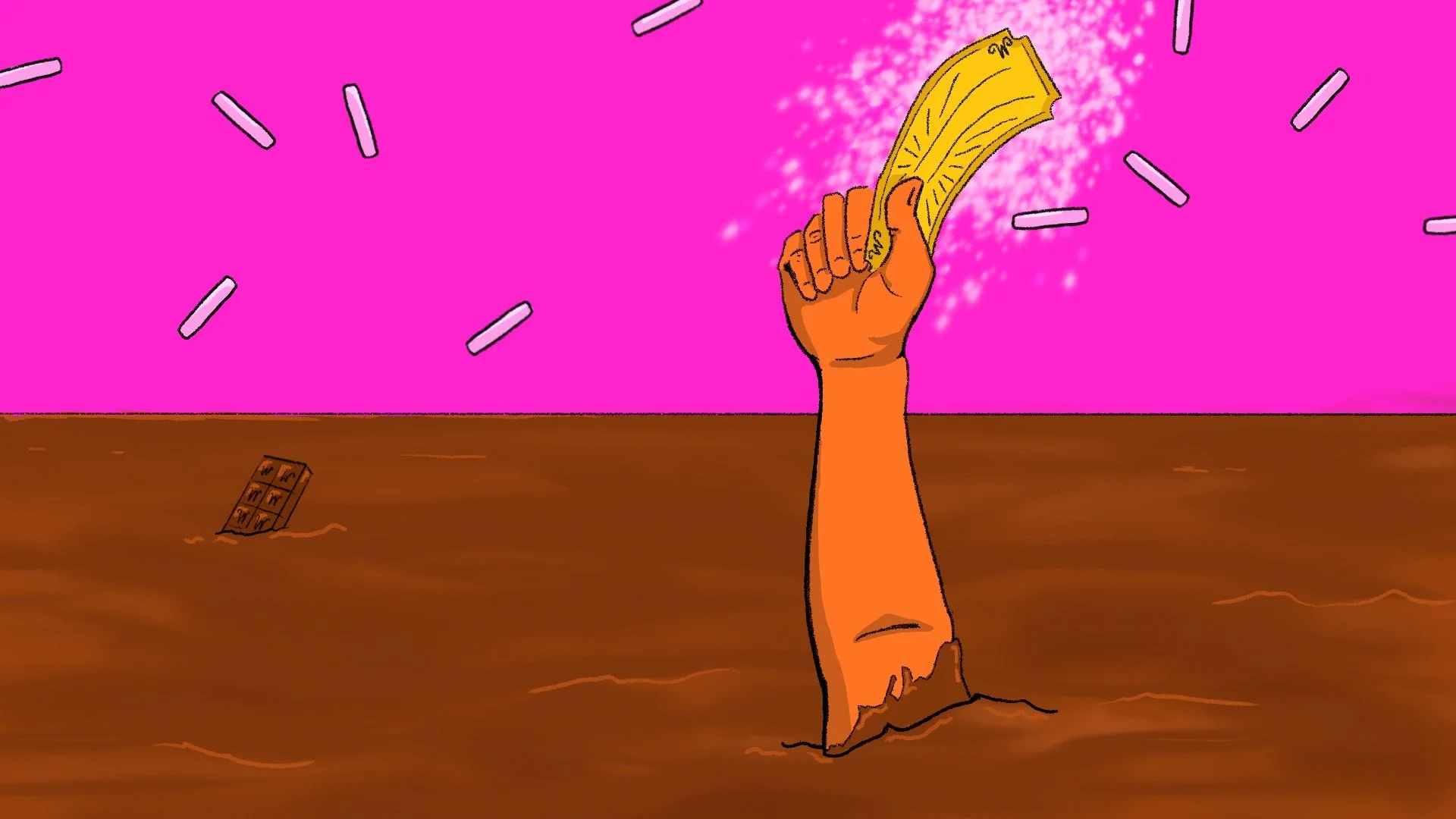
Illustration by Zoe Wren Arntsen, Illustrator.
Reality is a loose term amid the absurdity of this decade's reality television boom. What qualifies as “real” varies from show to show, and while audiences are quick to question the authenticity of what unfolds on screen, the bigger question lies beyond the episodes: what happens to the people whose lives create the entertainment? The real truth isn't in the stream, it’s behind the camera with the contestants becoming moving pieces within the machine.
Reality television spans a wide range of genres, from high-stakes competitions like “Beast Games,” to relationship-driven series like “Love is Blind” and narrative-inspired challenges such as “Squid Game: The Challenge.” The latest addition and top 10 on Netflix is “Wonka's The Golden Ticket.”
Based on the classic Roald Dahl novel and film adaptation, this reality show follows teams of contestants as they participate in Wonka-based physical, moral and emotional challenges. Participants enter the arena of a replicated Wonka factory based on the original story with their partner, where they enter the world of Wonka for a month. One of the Golden Ticket winners is Chapman alum Ava Ganz.
“We really went into a factory with that exact setting that you see on camera, and it was so nostalgic and surreal and very overwhelming, but special and just as magical as it seems on screen,” Ganz said.
Although they lived in the fantastical world of wonder during the duration of the show, Ava’s reaction to the release was anything but magical, as the reality she experienced behind the scenes differed drastically from the version audiences saw on screen.
“I was watching it and I felt really sick to my stomach at first about how I was portrayed, and a lot of nuance was missing,” Ganz said. “I was down for the Veruca trope in the sense of wardrobe and humor and a little bit of game strategy, but it was really important to me that they included other true facts about my life that added more substance as inspiration for younger girls watching, and that was missing.”
It is not unknown that the production's job is to entertain. Large media companies will continue to do that no matter what, but where does this cross the line from enhanced entertainment to pure fantasy?
“The influencer job title was just my last straw. Because (with) everything else, I felt like I could be kind of gaslit into feeling like it was all in my head, whereas something written out that was blatantly not true and never been said from my end or by anyone else,” Ganz said. “That's blatantly not what I do, and I know exactly why (they're) putting it there because the real truth about me goes against the narrative that (they’re) presenting.”
Going into the show aware that she’d be playing a “Veruca” type contestant was common knowledge for Ganz. However, the final portrayal differed from the wardrobe, personality and overall energy she had agreed to.
“I was down for the archetype, and I played into the Veruca wardrobe, which was all set ahead of time, so I knew that that was going to be an element,” Ganz said. “I went in under the pretense that we were going to tell a new Veruca story because I'm not Veruca, I'm Ava. And I thought that we were going to present a Veruca who wants it, wants it bad, but goes out and gets it herself, and is very self-sustained, intelligent, not quick to emotion, stays grounded under pressure, gets down and dirty, because that's me.”
Aside from the narrative portrayal, Ganz and the relationships of other contestants were hardly included in the cut, leading to the sweet moments of vulnerability between challenges and partnerships being short-lived.
“We had the living quarters, so between challenges, we were in the living quarters and we were all bonding and hanging out,” Ganz said. “We have a cast group chat, and the whole consensus in the chat as soon as the show came out was, ‘Where are interactions with each other? Where are our relationships with each other?’”
With elaborate sets and special guests, the focus of the show relied heavily on Willy Wonka’s familiar whimsical magic engaging the audience. But between the gumballs and chocolate river laid real friendships and human interaction that made the show as intriguing as it was.
“The people are always still the heart of the story and why people watch,” Ganz said. “Wonka is the thing that gets them to click, but the people on the show are going to be what makes them stay and invested in their journeys in the game. I do think that Netflix missed out by what felt like getting a little overexcited about the ‘Wonka’ and focusing less on the cast and narrative of it all.”
Despite her disagreements, Ganz’s experience highlights the thing reality TV often overlooks: the reality of the people living it. Behind the extensive sets, dramatic challenges and thought-out narratives are real individuals whose stories extend beyond what makes the final cut. As reality TV continues to battle the line between entertainment and authenticity, the question may be not how much the audience sees is real, but how much is missing. The cameras may capture the competition, but they don’t always capture the whole story.