
A saga of SGA scandals
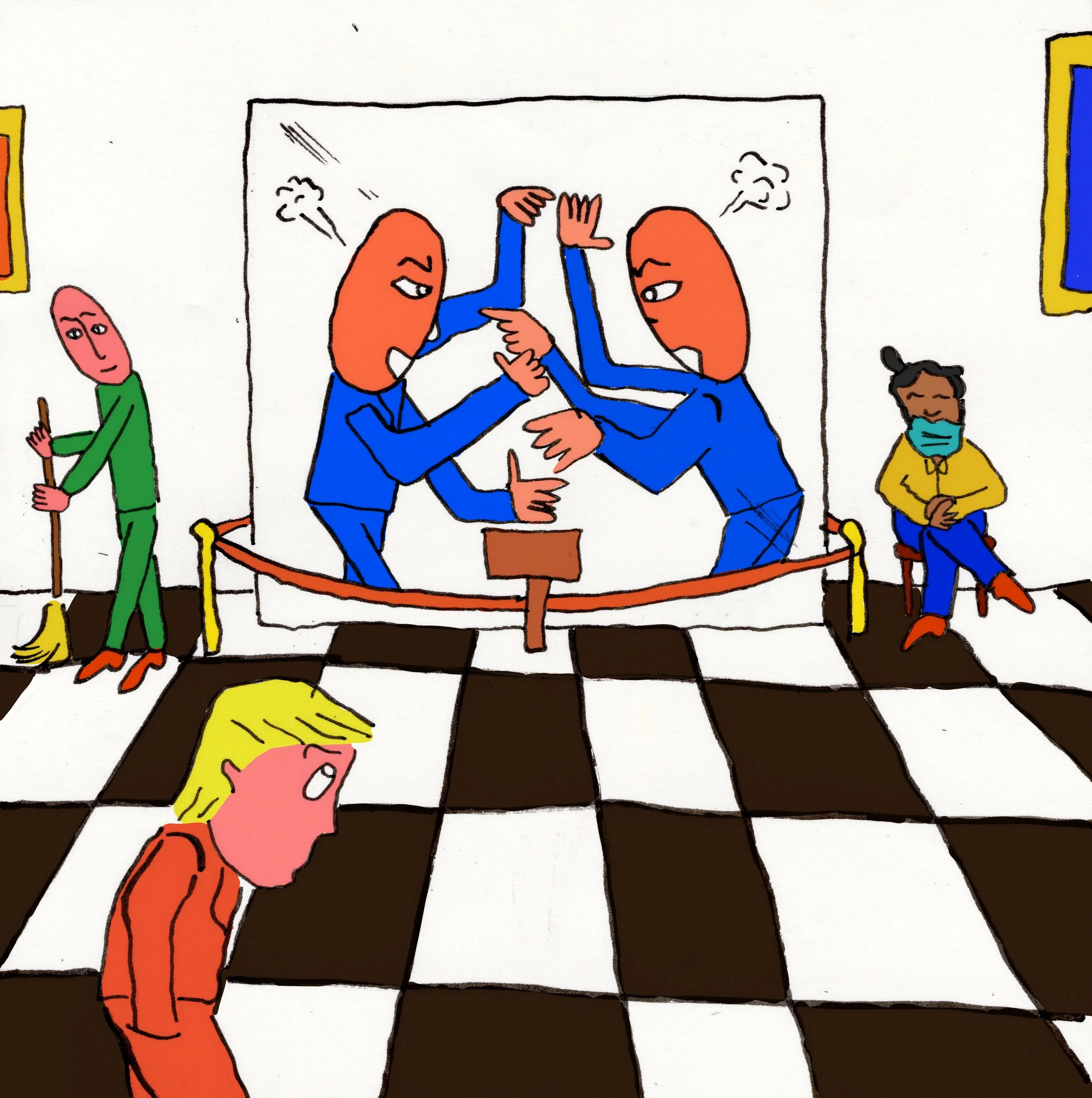
Illustration by Sami Seyedhosseini, Photo Editor
A century of headlines has documented life on campus — the celebrations, the victories, the debates and perhaps the most interesting, the controversies. Among the most recurring sources of contention has been the student government.
Student government serves as the official representative body for undergraduate students, advocating on behalf of the student body, organizing campus initiatives and overseeing the allocation of student activities fees to clubs and organizations. Every undergraduate student contributes to those funds through tuition, paying approximately $160 a year.
From election scandals to funding disputes, student leaders have repeatedly found themselves at the center of campus conversations. A look into The Panther archives reveals that, despite changing names, faces and issues, the student government has rarely been without controversy.
The 1960s: Challenging power
Across the country, the 1960s turned college campuses into hubs for political debate and student activism. Chapman, too, had its moments of political intrigue, playing out in student government.
An editorial comment printed in the Nov. 1, 1968, issue briefly details how the Associated Student Body (ASB), the then student government, failed to follow through on publishing and distributing its constitution well into the school year.
While urging students to demand to see the constitution, The Panther also offered to publish a special supplement containing the constitution, the bill of the senate and the bylaws of the court, all for $110.
“Ask that the constitution be published by the fastest means available with a budget of over twenty-two thousand dollars you have the right to a copy of your constitution,” the editorial reads.
Miscommunication wasn’t the only complication this school year, as elections brought new tensions.
The Nov. 8 issue reported that on Oct. 24, 1968, the first student court hearing was held over a contested election for the ASB. The hearing was held by student Chief Justice Richard Weatherigton and two other associate justices. They reviewed the case of Walter Greismeyer, who contested the election due to alleged irregularities.
The four charges presented dealt with a discrepancy in the election dates advertised on a poster and the actual dates, which were held a day after nominations closed, giving candidates no time to campaign; a person directly involved in the election being observed behind the polls; the lack of transparency in who and when the ballots will be counted; and the election committee failing to report the election to the senate at the first meeting.
After a decision was postponed for five days due to a lack of quorum, the court ruled the senator's seat void and ordered another election.
The 1970s: Squabbles and fraud
Tensions with the student government rose sharply during the 1970s, especially in the mid-70s, not only within the organization itself but also with The Panther.
In a staff editorial printed in the Oct. 22, 1976 issue, The Panther called out the ASB President, Karl Hudson, for misuse of power and disregarding the purpose of the student government.
“Having achieved this high office, he has proceeded to make a mockery of student government,” the staff wrote. “Government has gotten out of hand. The tail is wagging the dog.”
This story ran alongside another written by The Panther Editor Judy Cain, who called the senate a “laughing matter.”
Hudson and The Panther continued to trade criticism and remarks over several months, eventually leading to Cain announcing her resignation as editor in the Nov. 19, 1976 paper.
“The quality of my work has been judged according to the content of my editorials, by individuals who have little or no knowledge of journalistic procedure,” Cain wrote.
The 1980s: Lack of responsibility
Criticized for a shrinking class and having too much power, the ASB struggled to gain student involvement and to stem rising resignations in the 1980s.
In the Feb. 21, 1989 issue, Deanna Knudson, the senior vice president, received three resignations from members of the senate. Lack of interest and communication also undermined the Senate's effectiveness, as many members were frequently absent and showed little active participation.
The number of senators dropped even further as reported in the March 10, 1989 issue, losing another three senators. The reasons for these resignations were not simply other jobs or coursework.
Senior Mark Highleyman felt the operation was not meeting students' needs in constructive ways, explaining that he felt ASB makes problems just to solve them. Resignations from two other students were due to the Senate's ineffectiveness in passing bills and its tendency to take weeks to resolve a simple issue.
Amid student and member frustration, ASB created a “student suggestion box” in which senate members would assess the seriousness of each request and then post the responses to these suggestions on the “suggestion board” in the student union. Although many of the suggestions were unserious, “The intent is good, but we want serious suggestions,” said President Kelly Ward. Although not all the requests could be met, members still read and arranged as many as possible into meetings.
The 2010s: President-elect turned fraternity thief
The 2010s faced more student resignations, the arrival of intense government elections and a president-elect turned thief.
In the February 2016 issue of The Panther, Wilkinson College senator Ryan Schindler resigned due to overcommitments, prompting yet another special election.
As elections for president and vice president of the 2016-17 Student Government Association (SGA) approached, a debate was held on March 10, during which the candidates were asked 12 questions by a panel. Questions included opinions on the new smoke-free campus policy, neighborhood relations and transparency between SGA representation and student body diversity.
The 2016-17 student government president and vice president election received the highest number of votes of any student government election, with 1,341 total votes cast, accounting for about 22% of the student population. Austin Kernan and Tyler Porterfield were elected the president and vice president on March 16 and set to take over their roles on May 1.
However, the president-elect and speaker of the House, Austin Kernan, resigned after being caught stealing. On April 12, Kernan resigned from his position after being caught stealing money from his fraternity, Delta Tau Delta (Delts) account. Kernan served as Delts treasurer, taking money from the fraternities' accounts for personal expenses, according to Delts president Andrew Primavera. Primavera confirmed that Kernan paid back the stolen money with interest.
Tyler Porterfield, the vice president-elect, claimed Kernan was honest and admitted to the crime.
“I know that he pretty much embellished money from his fraternity and that it was a pretty significant amount,” said Porterfield.
Kernan declined to disclose legal details, stating his resignation was due to personal reasons. With this change, SGA filled both the vacant senate and senator positions, though it needed more time to consider the presidential vacancy.
The 2020s: Power and accountability
In the 2020s, SGA controversies center on questions of transparency, representation and how student leaders used their authority.
In March 2023, tensions grew between SGA and student organizations over funding. Eight clubs signed an open letter criticizing delays, unclear decisions and lack of transparency in the funding and reimbursement process. SGA responded by meeting with club leaders, clarifying its procedures and creating a public tracking system for reimbursement requests.
In the fall of 2023, SGA faced renewed criticism after changes to its funding policies were made without what student organization leaders said was sufficient consultation. Following concerns raised at a Senate meeting, SGA voted to reverse several of the changes, including policies concerning funding-request deadlines, merchandise and food. 66 student organizations later signed an open letter thanking SGA for reversing the policies while calling for greater collaboration and transparency.
Two years later, the SGA vice president-elect faced accusations of falsifying campaign documents during the election. The allegations were ultimately dismissed after a university review found no evidence of a violation. The controversy nevertheless prompted changes to election procedures, including the removal of the signature requirement for candidates.
Now, following major contentions in the spring 2026 SGA election, the university has frozen SGA operations and is conducting an ongoing review, leaving the student body without a functioning government.
This recent issue of alleged election fraud and SGA operation issues is not new for Chapman. Over the past 100 years, SGA has faced accusations of having a lack of student representation, fraudulent elections, increased resignations due to ineffectiveness and even a thieving president-elect. Now, as SGA faces another period of uncertainty, the archives suggest one thing: when it comes to student government, there’s always a story waiting to be told.